Specializing in high-speed PCB design, as well as PCB manufacturing and PCBA production services for batch products!


Product Center
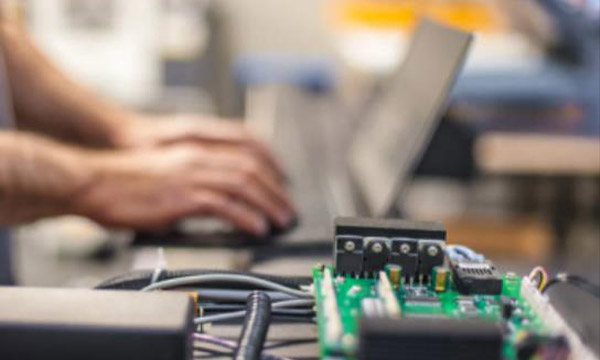
I. Overview of the PCBA Finished Product Assembly Process
PCBA finished product assembly is the process of precisely soldering or installing electronic components onto a printed circuit board (PCB) in accordance with design requirements, and then forming a complete electronic product through subsequent assembly procedures. This process can roughly be divided into the following steps:
Preparation stage: This includes the inspection and cleaning of PCB boards, the procurement and inspection of components, etc. Ensure that all raw materials meet quality standards to lay a solid foundation for the subsequent assembly work.
SMT(Surface Mount Technology) Surface mount technology: It uses automated equipment to precisely mount miniaturized electronic components (such as resistors, capacitors, IC chips, etc.) at designated positions on the PCB board and fixes them through reflow soldering and other methods. SMT technology has greatly enhanced assembly efficiency and accuracy.
DlP(Dual In-ine Package) plug-in technology: For components that cannot be installed through SMT technology (such as large connectors, transformers, etc.), they are inserted into the through-holes of the PCB board by manual or automated equipment, and soldering operations such as wave soldering are carried out.
Assembly and testing: Assemble the soldered PCBA board with other non-PCB components (such as the casing, display screen, buttons, etc.) to form a complete electronic product. Subsequently, functional tests, performance tests and reliability tests are carried out to ensure that the product meets the design requirements and quality standards.
Packaging and shipment: The products that have passed the test will be packaged, with necessary labels and instructions affixed, and then shipped as per the customer's requirements.
Ii. Technical Highlights and Challenges Technical highlights
Precision control: The assembly of PCBA finished products has extremely high precision requirements. Whether it is the placement position of components or the quality of soldering, all need to be strictly controlled within the allowable error range. Automation and Intelligence: With the advancement of technology, the application of automated and intelligent equipment in the assembly of PCBA finished products is becoming increasingly widespread. These devices not only enhance production efficiency, but also reduce labor costs and error rates.
Anti-static and anti-pollution: Electronic components are highly sensitive to static electricity and pollution. Therefore, strict anti-static and anti-pollution measures must be taken during the assembly process to ensure that the components are not damaged.
Challenge
Miniaturization and densification of components: With the continuous miniaturization and functional diversification of electronic products, the size of components is getting smaller and their arrangement is becoming denser, which brings greater challenges to assembly work.
Quality control: The assembly of PCBA finished products involves multiple links and factors. Any negligence in any link may lead to product quality issues. Therefore, how to ensure quality control throughout the entire process is an urgent problem to be solved.
Cost control: While pursuing high quality and high efficiency, how to control costs is also an important challenge faced by the assembly of PCBA finished products.
Iii. Quality Control
The quality control of PCBA finished product assembly runs through the entire production process, including multiple links such as raw material inspection, production process monitoring, and finished product testing. To ensure product quality, enterprises need to establish a complete quality management system, strengthen employee training, enhance employees' quality awareness, and at the same time adopt advanced testing equipment and methods to strictly control and supervise every link.
Iv. Future Development Trends
With the continuous development of the electronics manufacturing industry, the assembly of PCBA finished products will also embrace new development opportunities and challenges. In the future, the assembly of PCBA finished products will pay more attention to the development directions of automation, intelligence and greenness. The application of automated and intelligent equipment will further enhance production efficiency and product quality, and reduce labor costs. Green production will become an inevitable choice for the sustainable development of enterprises. In addition, with the continuous development of technologies such as the Internet of Things and artificial intelligence, the assembly of PCBA finished products will also witness more innovations and application scenarios.
In conclusion, the assembly of PCBA finished products is an indispensable and crucial link in the electronics manufacturing industry. By constantly optimizing production processes, enhancing technological levels and strengthening quality control, enterprises can produce more high-quality, efficient and reliable electronic products, meeting market demands and customer expectations.